

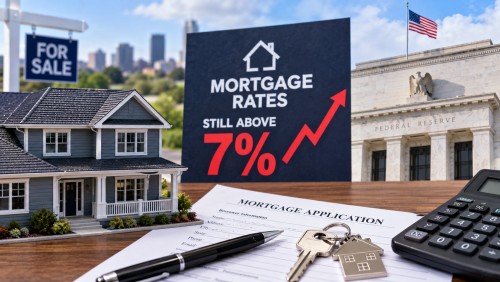
Prospective homebuyers in the United States are facing increased financial pressure as mortgage rates continue to hover above 7%, following the Federal Reserve’s latest interest rate hike. The rising rates, which have climbed significantly since earlier this year, are making it more expensive for individuals and families to secure financing for home purchases.
The Federal Reserve recently increased its target interest-rate range to 3.75%–4% in response to persistent inflation levels that remain above the 2% target. However, mortgage rates are not directly tied to the Fed’s policy rate. They are influenced by a combination of financial market dynamics, inflation expectations, and investor demand. Consequently, the Fed’s decision does not necessarily result in a proportional change in mortgage rates.
As of September 17, 2026, the average 30-year fixed mortgage rate in the U.S. stood at 7.37%, up from 5.75% in March, while the 15-year rate was 6.62%. This uptick has increased monthly payments for many homebuyers, adding to the overall cost of purchasing a home. Some borrowers might still find rates below the national average, depending on factors such as their credit score, down payment, and lender terms. Additionally, paying mortgage points upfront or opting for adjustable-rate mortgages may offer alternative solutions, albeit with their own set of risks and costs.
The refinancing landscape has also shifted, with the average 30-year refinance rate at 7.41% and the 15-year refinance rate at 6.75% as of mid-September. Homeowners with existing mortgages at lower rates might find refinancing less appealing unless the potential savings outweigh the costs involved.
Looking ahead, the trajectory of mortgage rates will largely depend on inflation trends, economic conditions, and expectations for further actions by the Federal Reserve. While future rate changes are possible, there is no certainty that waiting will lead to more favorable borrowing conditions.