

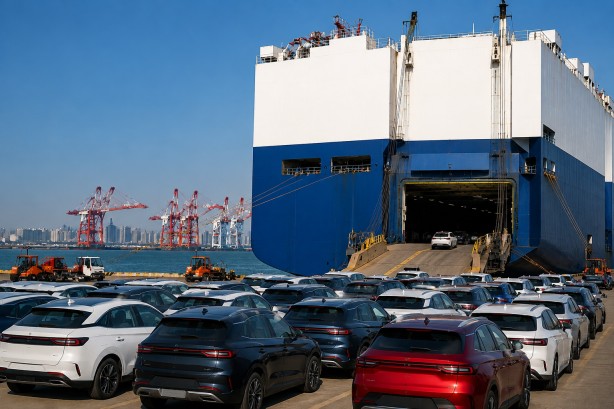
In a significant development for China’s automotive industry, the country exported over 1 million vehicles in a single month for the first time in June. This achievement contributed to a 27% year-on-year increase in China’s overall exports, according to recently released customs data. The impressive performance underscores China’s potential to meet or even exceed last year’s record trade surplus, fueled by a surge in global demand for its vehicles, electronic products, and advanced technology goods.
Chinese automobile manufacturers like BYD and other homegrown brands are increasingly making their mark on international markets, with a strong focus on Europe. The rapid growth in exports of electric vehicles and hybrid models from China has intensified competition for established European carmakers, putting additional pressure on the region’s auto industry. This expansion has also resulted in robust export figures to the European Union, further enlarging China’s trade surplus with the bloc.
The ongoing boom in Chinese exports could potentially lead to heightened trade tensions, as Western countries closely observe the impact of China’s expanding manufacturing footprint. Analysts indicate that this dynamic might provoke more scrutiny from Western governments concerned about the implications for their own industrial sectors.
Beyond the automotive sector, China has also seen a substantial rise in the export of integrated circuits. This trend is largely driven by the growing global demand for semiconductors and artificial intelligence technologies. The boost in these exports further solidifies China’s position as a leading exporting powerhouse on the world stage.
Economists point out that with domestic demand showing signs of weakness, Chinese manufacturers are increasingly turning to international markets to sustain growth. This shift highlights China’s strategic role in global trade, as the nation continues to be one of the largest exporting economies worldwide.