

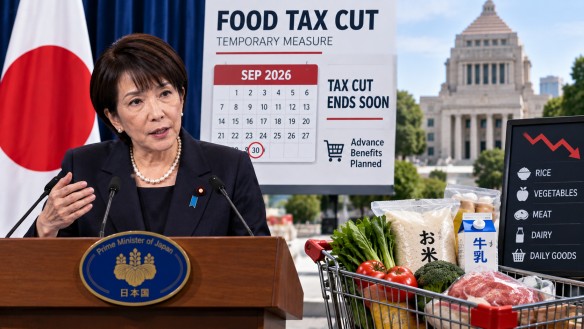
Japan’s government has unveiled a plan to introduce advance cash benefits for low- and middle-income households, coinciding with the expiration of a temporary reduction in the consumption tax on food slated for 2029. The proposed initiative involves lowering the food tax from its current rate of 8% to 1% over a two-year period starting in April 2027. As the reduced rate concludes in April 2029, eligible households would receive half of their annual benefit in advance to alleviate the financial impact when the tax reverts to 8%.
Set to commence in April 2027, this income-based benefit program will adjust payments based on the income levels of recipients and the number of children in their households. The government estimates that the annual payments for fiscal years 2027 and 2028 will amount to approximately ¥600 billion, or $4 billion. This initiative is part of a broader policy framework that the government plans to finalize by September, with a legislative proposal scheduled for introduction during an extraordinary parliamentary session in October.
The funding for this temporary tax reduction is anticipated to be sourced through a review of existing subsidies, special tax measures, and government spending, rather than resorting to deficit-financing bonds. However, the specific funding sources are still under discussion and yet to be determined. The government is intent on avoiding additional financial burdens by identifying sustainable funding avenues within current fiscal frameworks.
Further measures are also in the pipeline to support sectors such as agriculture, forestry, fisheries, and restaurant businesses, which might be impacted by these tax changes. In addition, retailers will be granted extra time to adapt to the requirements of tax-inclusive price displays, ensuring a smoother transition to the new tax rates and compliance standards.